Ecommerce / Legacy Modernization
Lord's Art Storefront Redesign
A production redesign of a long-running Christian art store, completed without replacing its catalog platform, checkout, or existing product URLs.
Storefront Screenshots
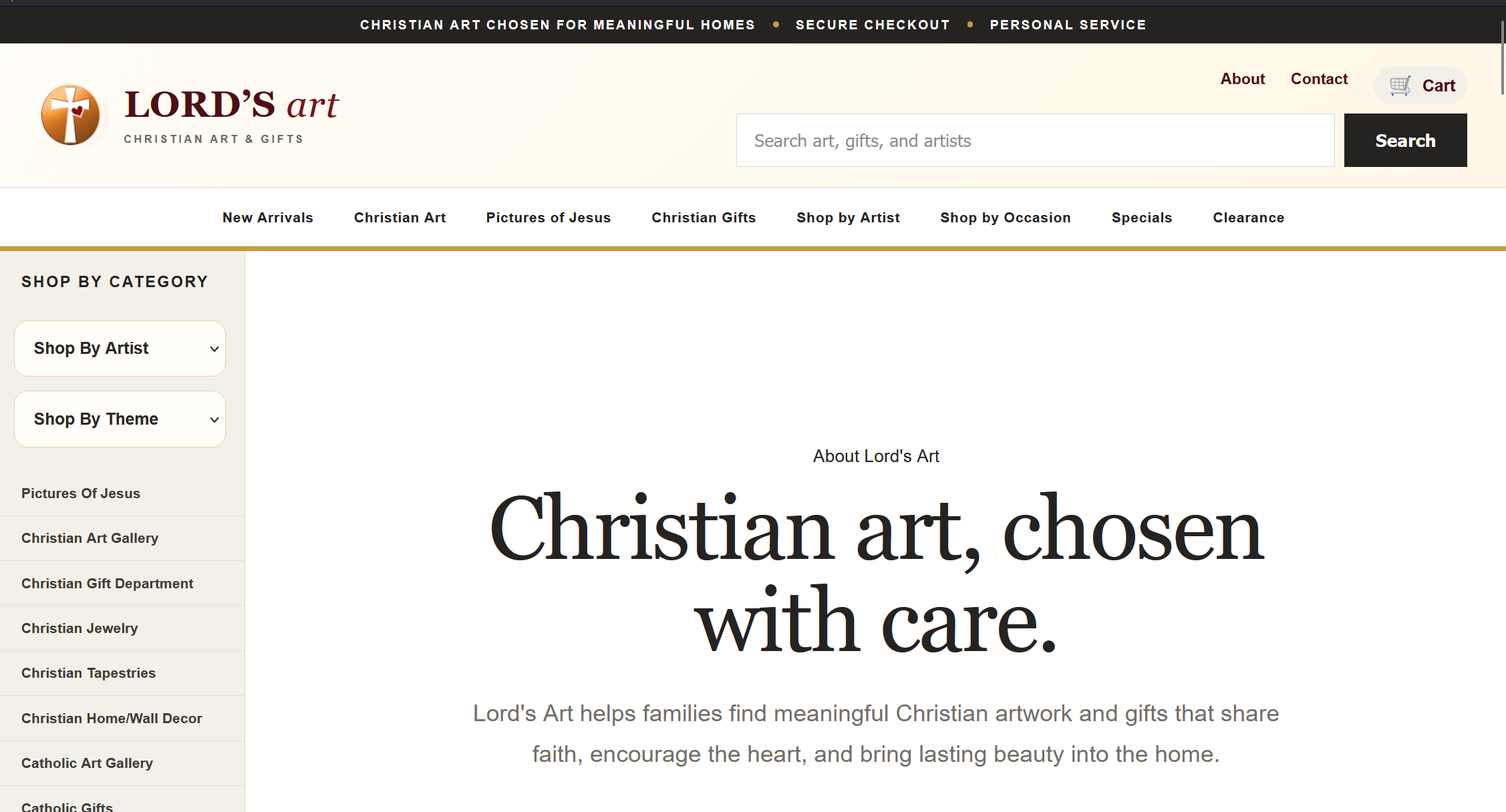
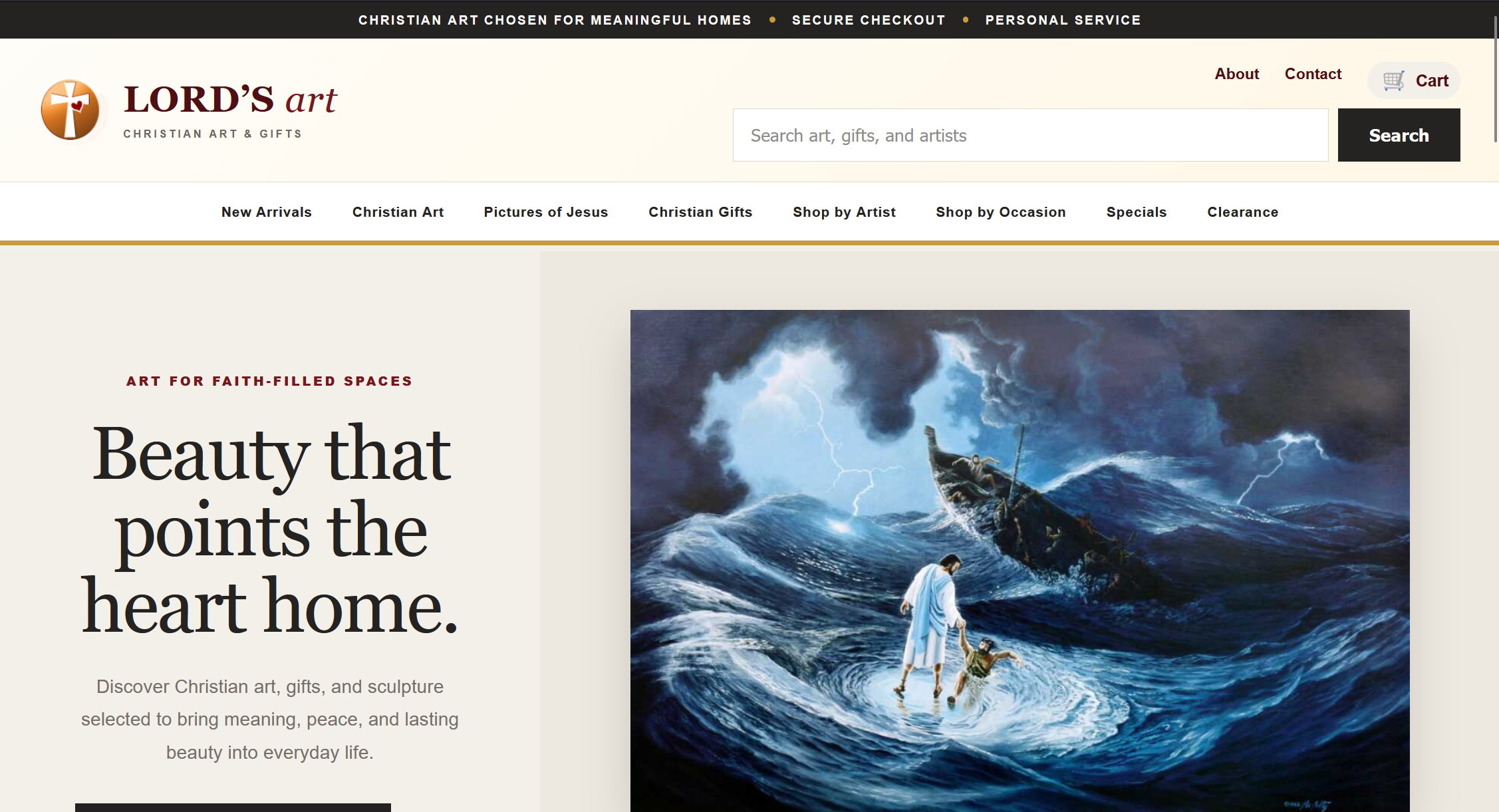
Overview
Lord's Art is a long-running Christian art and gift store built on Turbify's legacy ecommerce platform. The store had a large catalog, but image-based controls, fixed layouts, inconsistent mobile pages, and years of accumulated content made it difficult to browse and maintain. My goal was to modernize the entire storefront without disrupting its products, checkout, or search history.
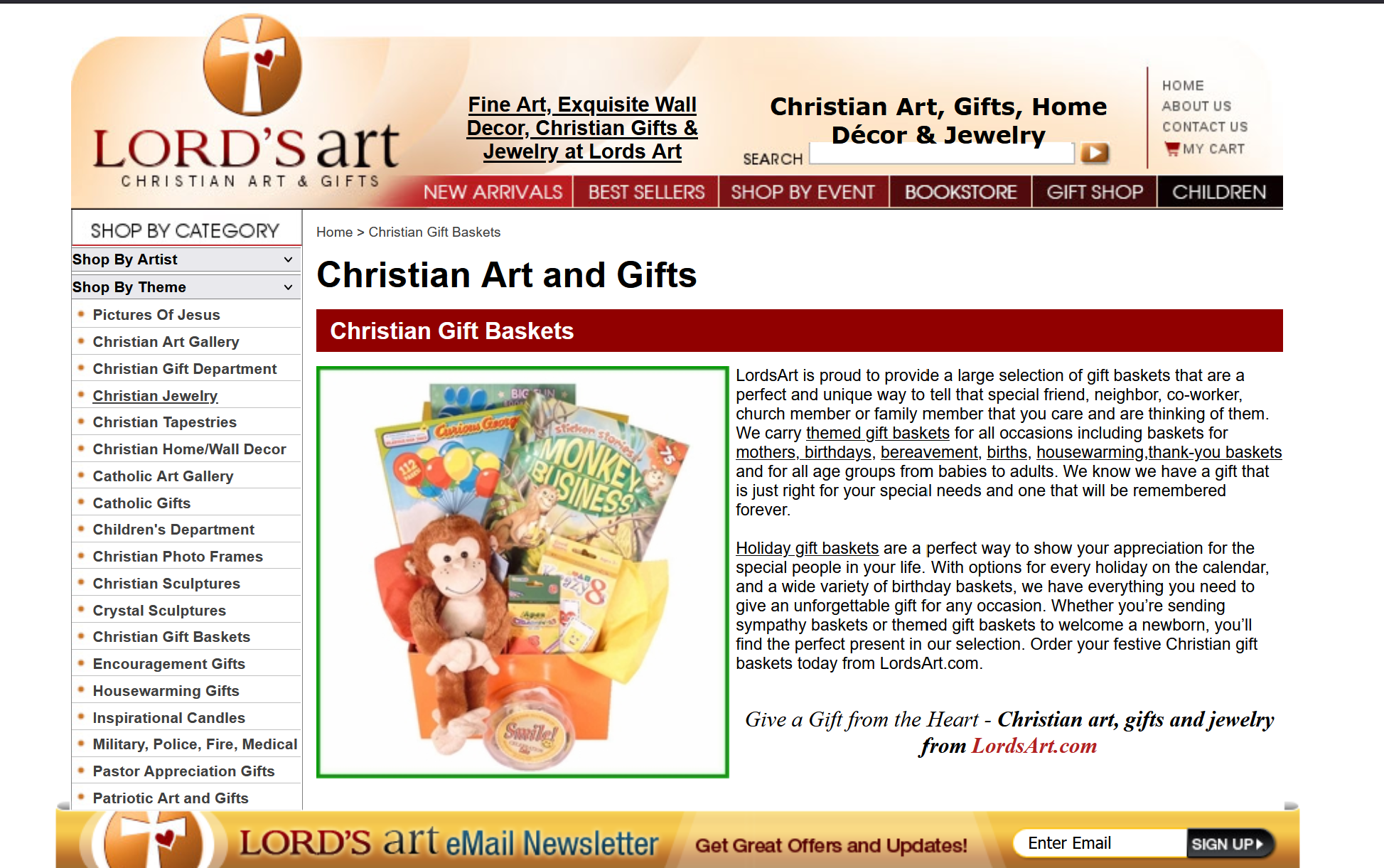
Before and After
The original design depended on a large image header, dense side navigation, fixed-width content, and image-based calls to action. The redesign keeps the recognizable logo and burgundy-and-gold identity while introducing a responsive header, stronger hierarchy, more whitespace, and artwork-led shopping paths.
What I Changed
- Replaced the image-based header with responsive HTML navigation, search, cart access, active-page states, and the existing logo.
- Rebuilt the homepage around an artwork-focused hero, featured collections, product rows, trust information, and clearer actions.
- Modernized search results, category grids, product cards, product pages, image enlargement, and purchasing controls.
- Unified desktop and mobile with collapsible navigation, flexible product grids, touch-friendly controls, and responsive imagery.
- Redesigned the About, Contact, Shipping, FAQ, Plan of Salvation, Link to Us, and customer-service experiences.
- Removed obsolete advertisements, duplicate forms, image-based buttons, broken links, encoding errors, and legacy visual clutter.
The Process
I began with a page-type audit and rollback backups, then developed a warm, gallery-inspired design system that could still support a large ecommerce catalog. Because Turbify generates legacy markup, I used progressive CSS and JavaScript enhancements instead of trying to replace the underlying commerce system.
Changes were tested incrementally in Turbify's unpublished preview. I checked representative home, category, search, product, service, cart-entry, desktop, and mobile paths before publishing. I used an AI-assisted browser workflow to speed up repetitive auditing and cross-page verification while directing the design, scope, and final decisions.
Technical SEO and Search Recovery
- Preserved more than 2,500 existing product and category URLs.
- Added stronger page titles, canonical URLs, heading structure, and search-focused category introductions.
- Added organization, website, breadcrumb, product, and offer structured data.
- Improved image alternative text, internal navigation, and handling for internal search-result pages.
- Verified the site in Google Search Console and submitted a sitemap containing 2,504 discovered pages.
Outcome
The finished storefront keeps the history, catalog, and recognizable identity of Lord's Art while presenting them through a more modern and consistent shopping experience. Customers can browse through clearer navigation, larger artwork, improved search results, responsive categories, and more focused product pages. The site also has a stronger foundation for future search visibility, product feeds, email marketing, and social discovery.
What I Learned
Modernizing a legacy system is fundamentally different from building a new application. A small shared-template change can affect thousands of pages, while an outdated-looking element may still be tied to search, navigation, or checkout behavior. This project taught me to work incrementally, protect existing functionality, test by page type, and design around real platform constraints. Most importantly, it reinforced that a redesign is not only about making a site look newer; it should make the business easier to trust, the products easier to discover, and the shopping experience easier to complete.